Home
  • Subscribe Now
  • Contact Us

Company

  • About Us
  • For investors

For Business

  • Partner
  • Affiliates

Resources

  • Pet Parent Tips
  • FAQ
  • Vet Calculator
PerkyPet
LinkedInInstagram
Download on the App StoreGet it on Google Play
Home
  • Subscribe Now
  • Contact Us

Company

  • About Us
  • For investors

For Business

  • Partner
  • Affiliates

Resources

  • Pet Parent Tips
  • FAQ
  • Vet Calculator
Behavior Robot
PerkyPet
LinkedInInstagram
Download on the App StoreGet it on Google Play

PerkyPet is an AI-powered pet wellness platform for informational and educational purposes only. It does not provide veterinary medical advice, diagnosis, or treatment and is not a substitute for professional veterinary care. Always consult a licensed veterinarian regarding your pet's health. PerkyPet uses artificial intelligence and user-provided data. Use of the platform is subject to our Terms of Service and Privacy Policy.

Privacy PolicyTerms
©2026 PerkyPet Inc. All rights reserved.
BlogA Pet Parent's Guide to Otitis Externa in Dogs

A Pet Parent's Guide to Otitis Externa in Dogs

Otitis externa is one of the most common ear conditions seen in dogs. Learn the causes, signs, diagnosis, and treatment options from a veterinary expert.
Dr. Michal Amitai
Dr. Michal Amitai, Veterinary AdvisorPublished: Mar 20, 2026
A Pet Parent's Guide to Otitis Externa in Dogs

What Is Otitis Externa?

Otitis externa is inflammation of the external ear canal, the tube-like passage that runs from the ear opening (pinna) to the eardrum (tympanic membrane). It is one of the most common reasons dogs visit the vet, accounting for 5-20% of all canine consultations globally, and up to 1 in 7 dogs will be affected at some point in their lives.

Otitis externa is not a disease in itself, rather it is a symptom of an underlying problem. Successful long-term management depends on identifying and addressing the root cause, not just treating the secondary infection.

Key distinction: Otitis externa involves the outer ear canal only. If infection spreads past the tympanic membrane it becomes otitis media (middle ear), a more serious condition requiring different management.

Why Do Dogs Get Ear Infections?

Veterinary dermatologists use a helpful framework called the PSPP model - Primary, Secondary, Predisposing, and Perpetuating factors - to categorize all the contributors to ear disease.

Primary Factors

These are the root causes that directly trigger inflammation inside the ear canal. The most common primary factor is allergic skin disease (atopic dermatitis), which accounts for 43-75% of otitis externa cases in dogs. Other primary causes include:

  • Parasites, particularly Otodectes cyanotis (ear mites) - especially common in puppies.
  • Food allergies.
  • Foreign bodies, such as grass seeds or plant awns lodging in the canal.
  • Endocrine diseases like hypothyroidism, which alter the skin environment.
  • Ear canal tumors or polyps.

Predisposing Factors

These are anatomical or environmental features that make an ear more vulnerable to infection but don't cause disease on their own. They include:

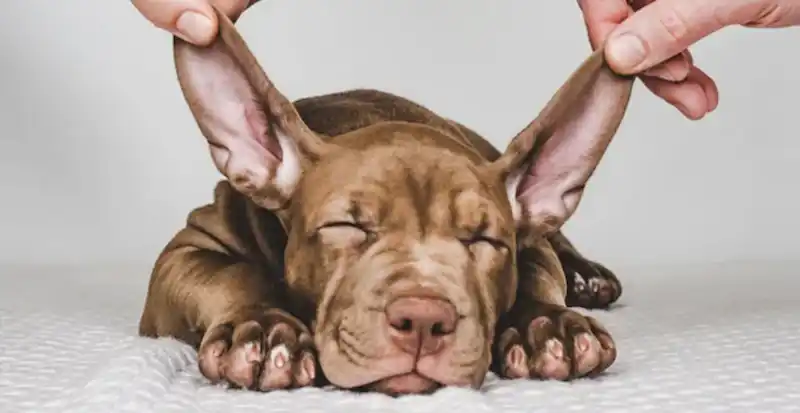
  • Pendulous (floppy) ears that reduce airflow and trap moisture
  • Narrow or stenotic ear canals, common in certain breeds
  • Excessive hair growth in the canal
  • Frequent swimming or bathing that creates a warm, moist environment
  • Excessive cerumen (ear wax) production

Perpetuating Factors

These are the secondary changes that keep the ear infected long after the original trigger has been addressed. The most important perpetuating organisms are:

  • Bacteria: Staphylococcus pseudintermedius, Pseudomonas aeruginosa, and Escherichia coli
  • Yeast: Malassezia pachydermatis
  • Chronic tissue changes: fibrosis, glandular hyperplasia, and canal narrowing that result from repeated cycles of inflammation.

Perpetuating factors are the primary reason why treatment often seems to work temporarily but the infection keeps coming back.

Which Breeds Are Most at Risk?

Ear anatomy plays a major role in susceptibility. A large epidemiological study found that 16 breeds had significantly higher risk of otitis externa compared to mixed-breed dogs.

The highest-risk breeds include:

  • Retrievers
  • Chinese Shar-Pei
  • Cocker and Springer Spaniels
  • Bulldogs
  • Poodles

Dogs with floppy ears have restricted airflow into the canal, raising humidity and temperature, thus creating an ideal environment for microbial proliferation.

Recognising the Signs

Catching otitis externa early makes treatment simpler and more successful. Watch for:

  • Head shaking or tilting to one side
  • Scratching or pawing at one or both ears
  • Redness or swelling of the ear canal opening
  • Discharge - yellow, brown, or black, with an unpleasant odor
  • Pain or sensitivity when the ear is touched
  • Crusting or scabbing on the inner ear flap (pinna)

How Is It Diagnosed?

Your vet will conduct a thorough workup, including:

  1. Otoscopic examination - to assess the canal walls, debris type and quantity, and check whether the eardrum is intact.
  2. Ear cytology - The single most important in-house diagnostic test. A cotton swab sample is collected from the ear canal and examined under a microscope to identify bacteria, yeast, and/or inflammatory cells. This should be done at every visit, including rechecks.
  3. Bacterial culture and sensitivity testing - critical when rod-shaped bacteria (like Pseudomonas) are seen in cytology examination, or when infections recur despite treatment.
  4. Full skin examination - to detect signs of underlying allergy.
  5. Advanced imaging (CT or MRI) - recommended for chronic or recurrent cases to rule out middle ear involvement.

Treatment

Topical therapy is the cornerstone of treatment and is strongly preferred over systemic antibiotics in order to minimize the risk of antimicrobial resistance. A typical treatment plan involves:

  • Ear cleaning with a veterinary-approved cleaner to remove debris and allow medications to penetrate.
  • Prescription ear drops containing a combination of an antimicrobial (antibacterial and/or antifungal) and an anti-inflammatory agent.
  • Systemic anti-inflammatory therapy (oral steroids) for severe or painful cases.
  • Systemic antibiotics reserved for cases where the eardrum is ruptured or infection has spread

Clinical trials show that both daily at-home treatment protocols and single or two-dose veterinarian applied long-acting gels achieve high success rates, with relapse rates as low as 10-11% in straightforward cases. However, failure to address the underlying primary cause (most often allergic disease) is the single most common reason infections return.

In severe, end-stage cases with irreversible canal changes, total ear canal ablation and lateral bulla osteotomy (TECA/LBO) surgery may be required. Studies show that 93% of dogs have an excellent or improved outcome following this surgery.

Preventing Recurrence

For dogs with recurrent ear infections, long-term management requires a proactive partnership with your veterinarian:

  • Manage underlying allergies - allergy testing, dietary trials, or immunotherapy can dramatically reduce flares.
  • Routine ear cleaning - use veterinary-recommended solutions and avoid inserting cotton swabs deep in the canal.
  • Dry ears after swimming or bathing
  • Regular recheck appointments - cytology at every visit confirms treatment is working before you stop medications.
  • Avoid over-cleaning - excessive cleaning disrupts the healthy microbiome and can cause irritation.

The Bottom Line

Otitis externa is rarely a "one and done" problem, but with the right diagnosis and a consistent management plan, most dogs can live comfortably with well-controlled ears. If your dog is showing any signs of ear discomfort, book a veterinary appointment early. The sooner the underlying cause is identified, the better the long-term outcome.

If you notice neurological signs such as facial asymmetry, a head tilt that persists, severe tenderness in the ear area or your dog crying when opening their mouth, this may indicate the infection has spread to the middle ear (otitis media), a serious complication requiring urgent veterinary attention.


Like what you see? Share with a friend.

In this article

More Articles

The Pet Microbiome Explained: 7 Everyday Habits That Support Gut Health

Dr. Iain Brunt
Dr. Iain Brunt

Is This a Pet Emergency? A Decision Support Guide for Suspected Poisoning

Dr. Iain Brunt
Dr. Iain Brunt

What to Do If Your Pet Eats Something Toxic

Dr. Liza Cahn
Dr. Liza Cahn

Join our community of fellow pet parents and vet experts today!

Get tips, wellness updates, and heartfelt stories that help you give your pets the care they deserve.

Health Tracker RobotNutrition Robot