Why are black cats tied to Halloween and bad luck? A veterinarian separates myth from fact on black cat history, coat genetics, and shelter adoption rates.

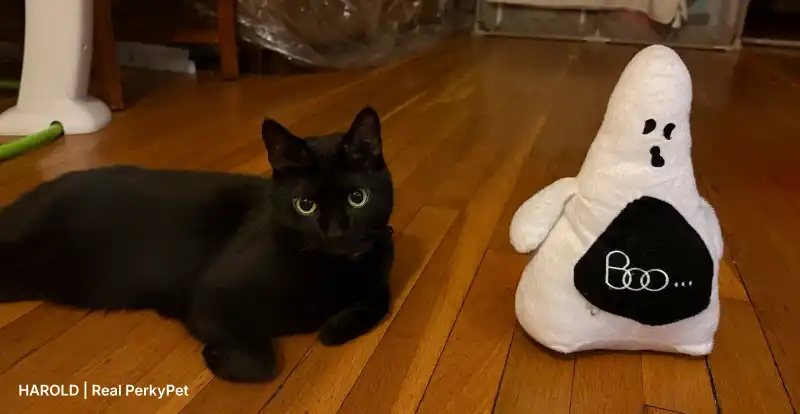
Whether it’s an annual trip to the pumpkin patch, apple picking, or going all-out for the costume contest, my family loves Halloween. And few animals are as closely associated with the holiday as the black cat. But behind the familiar decorations and superstitions is a fascinating mix of history, folklore, science, and genetics. Why did black cats become associated with witches and bad luck? What actually makes their coats black? And do centuries of superstition still affect how we view and treat black cats today?
Cats have held many different symbolic roles throughout history, including associations with luck, protection, and divinity. The roots of Western superstitions surrounding black cats, however, can be traced in part to medieval times in Europe, when cats became increasingly associated with witchcraft, the Devil, and supernatural “familiars” believed to assist witches. Historical accounts and religious writings sometimes described cats as appearing in alleged occult rituals, and by the time of the witch trials, cats were among several animals linked with witches and magic.
Why black cats specifically became the focus of these superstitions is less certain. The color black already carried strong associations with darkness, evil, and the supernatural. Over time, artwork, literature, and popular culture have helped reinforce the familiar image of a witch accompanied by a black cat, and the notion that a black cat crossing your path was a bad omen.
While certain coat colors are often stereotyped (such as social and talkative orange tabbies or spicy calicos), there is no convincing scientific evidence that black cats have a distinct personality simply because of their color. A cat’s temperament is shaped by a combination of factors, including genetics, early socialization, life experiences, environment, and individual variation. Black cats can be playful, affectionate, shy, independent, or social, just like cats of any other color.
Some animal shelters historically restricted black-cat adoptions in October based on fears that the animals would be targeted for abuse or even sacrificed, but animal-welfare organizations now generally describe this practice as being based on an urban legend. There is no reliable evidence showing that black cats face an increased risk of intentional harm during the holiday.
Halloween can still pose risks to any cat, however, including escape through frequently opened doors, stress from unfamiliar visitors, and exposure to candy, costumes, or decorations. On Halloween night, the safest place for any cat is at home, in a quiet, secure room with everything they need.
A cat’s coat color and pattern are determined by the combination of genes they inherit from their parents. Different genes influence which pigments are produced, how much pigment is deposited in each hair, whether individual hairs are solid or banded, and how color and patterns are distributed across the body.
Cats produce two main types of melanin: eumelanin, which creates black and brown shades, and pheomelanin, which produces red and cream colors. In black cats, eumelanin is the dominant visible pigment. The TYRP1 gene, sometimes called the Brown or B locus, influences the color of eumelanin. The dominant form produces black pigment, while other variants can alter it to chocolate or cinnamon.
But producing black pigment does not necessarily make a cat look solid black. The Agouti gene (ASIP) helps determine whether each hair contains alternating bands of light and dark pigment, as seen in tabby cats. In solid black cats, that banding is suppressed, so the hairs appear uniformly dark. Additionally, a dilution gene changes how pigment is distributed within the hair shaft, making black fur appear gray or “blue.”
What about tuxedo cats? The white patches on a tuxedo cat are caused by a white-spotting gene that affects where pigment-producing cells develop. Areas without these cells grow white hair, while pigmented areas retain their underlying color.
Black is an accepted coat color in many cat breeds, including the British Shorthair, Maine Coon, Persian, American Shorthair, and others. Domestic shorthair and domestic longhair cats can also be solid black. The Bombay, however, is a unique breed developed specifically to have a short black coat, nose, and paw pads. The breed was created to resemble a miniature black panther, and unlike breeds that come in a variety of colors and patterns, Bombays are always black.
A black cat’s coat may develop rusty, reddish, or brownish highlights after spending a lot of time in the sun. Ultraviolet light can bleach pigment in the hair shaft, making black fur appear lighter, similar to the way human hair can lighten with sun exposure. Other factors such as genetics, age, nutrition, medical conditions, and seasonal coat changes can also influence appearance. A noticeable coat-color change accompanied by poor coat quality, hair loss, excessive grooming, or other signs of illness warrants a veterinary visit.
You may have heard that black cats are less likely to be adopted, a concept known as black cat bias, but the situation is more complicated than that. Some research suggests that black cats can face a modest disadvantage in shelters, while other data suggest they are adopted at similar rates to cats of other colors.
A study of 7,983 cats at an urban Kentucky shelter found that black cats had the lowest adoption rate and highest euthanasia rate among the coat-color groups studied. However, other factors such as age, health, and other characteristics were also involved.
Other shelter data tell a different story. A 2013 ASPCA study cited by HumanePro found that black cats were adopted at roughly the same rate as cats of other colors. Black cats made up 33% of shelter intake and 31% of adoptions, suggesting that part of the perception that they are left behind may simply be due to the fact that there are so many black cats entering shelters in the first place.
There are several possible reasons why black cats may sometimes be overlooked, including lingering superstitions and negative associations, and the practical challenge of photographing dark-coated cats in a way that clearly shows their facial features and personality. Overall, the evidence suggests that black cat bias may exist in some shelter populations, but black cats are not universally less likely to be adopted.
https://www.history.com/articles/black-cats-superstitions
https://www.shelteranimalscount.org/the-magic-of-black-cats-debunking-myths-with-animal-level-data
https://humanepro.org/blog/black-cats-and-halloween
https://vgl.vetmed.ucdavis.edu/resources/cat-coat-color
https://humanepro.org/magazine/articles/whos-afraid-big-black-cat