A standard vet visit runs just fifteen minutes, and the brisk pace reflects staffing shortages and a packed schedule, not indifference toward your pet.
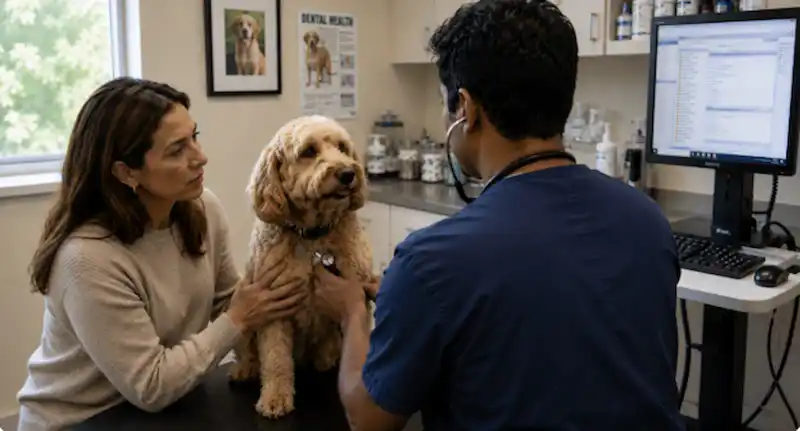
A standard wellness appointment runs fifteen to twenty minutes. In that window we greet you, complete a full physical exam, take your history, answer your questions, address any concerns, and document everything for the record before moving to the next patient. We know that can feel fast, and we understand why a brisk appointment is sometimes read as a brisk attitude toward your pet.
It is worth explaining what is actually happening in those minutes, because the pace is rarely about what it appears to be about.
During the pandemic, nearly one in five American households adopted a new pet. That is a lot of new patients entering the system at once, and they have stayed. Clinic appointment volumes across the US rose 6.5% between 2020 and 2021, and the demand has not eased since. Whether the overall supply of veterinarians will keep pace with that demand over the coming decade is a question the profession's own bodies disagree on. What is not disputed is what the USDA confirmed in 2025: 243 rural veterinary shortage areas across 46 states, the highest number ever recorded, with meaningful gaps in access that no amount of debate about national projections resolves for the communities inside them.
In practice, most practices are seeing more patients than they were five years ago within the same hours and the same number of exam rooms. Appointment lengths are set for throughput because the schedule has to absorb the demand. The fifteen-minute slot is a constraint of that system rather than a clinical judgment about how much time a pet deserves.
The other reality is that medicine itself has changed. The scope of what we should discuss in a single appointment has grown considerably over the past decade. Dental health. Parasite prevention. Weight and body condition. Behavioral changes. Pain assessment. Senior wellness screening. Vaccination protocols that require explaining, not just administering. Nutrition questions that take time to answer properly. Each of these matters. None of them disappears because the clock is running, and every one of them is competing for space in the same short window.
Add to this the documentation burden that follows every appointment. Clinical notes, prescription records, referral letters, client follow-ups. The administrative workload of modern veterinary practice is significant, and most of it happens in the margins of an already full day.
There is a human factor worth understanding too. The Merck Animal Health Veterinarian Wellbeing Study, conducted across the profession every two years, found that 61% of veterinarians report high levels of exhaustion, compared with 32% of the general working population, and that one in three is on-call at least five evenings or weekends per month. These are not figures we raise for sympathy. They matter because they shape how a clinical day is managed.
What can look like speed from the outside is usually careful prioritization. A vet moving efficiently through your appointment may be doing so because an earlier case ran long, because a patient in the treatment area needs monitoring, or because the day has to be paced so that the quality of care holds steady from the first appointment to the last. Managing time deliberately is part of practicing good medicine when the schedule is full.
It also means that not everything makes it into the room. There are follow-up questions a vet would explore and conversations they would extend if the next patient were not already waiting. That gap between what gets covered and what could be covered is a real feature of a compressed appointment, and it is one reason preparation on both sides makes such a difference.
Understanding the pressure is one thing. Doing something useful with it is another. The good news is that pet parents can make a meaningful difference to the quality of a short appointment, and the preparation required is minimal.
The single most effective thing you can do is arrive with a written list of concerns, ranked in order of what worries you most. Verbal lists have a way of reorganizing themselves under the fluorescent lights, and the concern you most wanted to raise often surfaces just as the appointment is wrapping up. A short note on your phone changes that entirely and gives us something to work through with you rather than trying to reconstruct the conversation.
Think before you arrive about any changes you have noticed at home over the past weeks: shifts in eating, drinking, energy, sleep, bathroom habits, or general mood. These details are clinically significant, and they are easy to forget in the moment. The more precisely you can describe what you noticed, and when it started, the faster we can move toward what matters.
It also helps to know your pet's current weight and any medications, supplements, or recent changes to their diet. If you are not sure, that is fine. But if you do know, bringing that information saves time that would otherwise go toward retrieving it.
There is one question that almost always opens up the conversation in a useful direction. Ask us: is there anything else you would want to look at if we had more time? It signals that you are open to a follow-up, that you trust our judgment, and that you are not hurrying us either. The answers to that question are often the most important part of the visit.
The pressures on veterinary practice are real, and they are worth naming plainly rather than papering over. They also do not change the fundamentals of the work. A short appointment is still a focused one. The clinical attention behind it draws on years of training, and the thinking about a case often continues well after the patient has left the room.
A brisk appointment, in other words, is a reflection of the system rather than a measure of how much the work matters to the people doing it. The more both sides understand the constraints, the more can be accomplished within them. That is the practical takeaway, and it is one the profession is working on from its side as well.
American Veterinary Medical Association (2025). USDA announces plan to address rural, federal veterinary shortages. https://www.avma.org/news/usda-announces-plan-address-rural-federal-veterinary-shortages
American Veterinary Medical Association (2024). Pet ownership rate stabilizes as spending increases. https://www.avma.org/news/pet-ownership-rate-stabilizes-spending-increases
American Veterinary Medical Association (2024). Veterinary profession heading in right direction with mental health. https://www.avma.org/news/veterinary-profession-heading-right-direction-mental-health
Merck Animal Health (2023). Fourth Veterinary Wellbeing Study: progress in addressing mental health challenges among veterinary teams. https://www.merck-animal-health-usa.com/newsroom/merck-animal-healths-fourth-veterinary-wellbeing-study-indicates-progress-in-addressing-mental-health-challenges-among-veterinary-teams/
PMC / Frontiers in Veterinary Science (2023). Veterinarian burnout demographics and organizational impacts: a narrative review. https://pmc.ncbi.nlm.nih.gov/articles/PMC10352684/
AJVR (2026). The coronavirus disease 2019 pandemic increased caseload and stress in veterinary surgeons. American Journal of Veterinary Research, 87(5). https://avmajournals.avma.org/view/journals/ajvr/87/5/ajvr.25.11.0391.xml
PMC / PLOS One (2025). Pet acquisition trends and veterinary care access in the US. https://pmc.ncbi.nlm.nih.gov/articles/PMC12220994/